

Oakwood: Carry it, address it, and then let it go
A conversation with musician Mathew Dwyer


Welcome to Human Pursuits, the column that features need-to-know names and stories in media and other creative spaces. Today, Oakwood frontman Mathew Dwyer on the Alberta-Texas connection, fifth-wave emo, embracing bad takes, and his band’s new record, “Blurred Away.”
It’s been said that it takes 10 years to become an overnight success.
Oakwood did it in about five.
In 2019, the West Texas trio quietly called it quits. It was the sort of farewell that local bands experience every single day.
No final show. No big announcement. No hard feelings. Honestly. They were still friends, but they were no longer a band.
That is, at least, until someone (probably their drummer, Noah Roots, but I honestly forgot to ask) re-uploaded their catalogue online.
Their discography was, like, eight songs. And they were suddenly being streamed in the millions.
How do you respond to happenstance?
For Oakwood, the answer was simple. They put their hair in a messy bun, tuned their guitars to FACGCE, and handled it. Tour. Then to the studio to record their first full-length, Blurry, which sounds like Algernon Cadwallader and La Dispute.
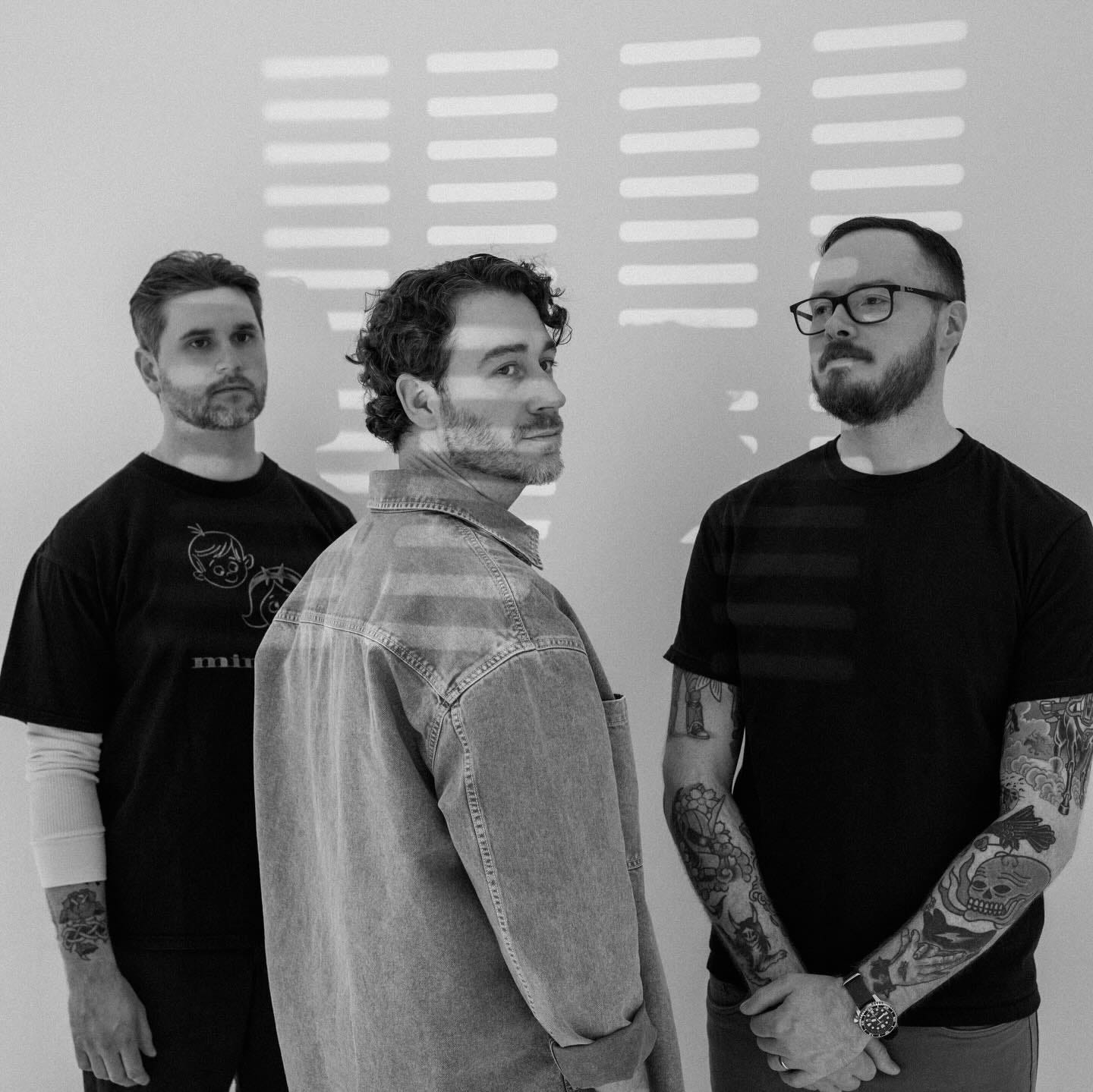
With plans to tour through late summer and early fall, the band—Roots, TJ James, and Mathew Dwyer—is also looking to the future.
And so, we had much to discuss.
Our edited and condensed conversation touched on Mathew’s semi-improvisational approach to lyrics, the band’s tour rider, and what Oakwood’s next album might sound like.
ES: You’re in Austin, and I was reading that, maybe as we speak, there are big thunderstorms bearing down on the city? Is that right? Laughs.
MD: I was actually gonna warn you about that. Now is the season for it, and yes, it’s a huge thing in Texas in general, which gets really gnarly weather. Really bad thunderstorms. If you lose me, that’s why.
ES: Are you from Austin originally?
MD: No, I’m from Odessa, Texas, which is six hours to the northwest. It’s West Texas. The band is all from Odessa/Midland. We came to Austin because it’s the only tolerable place in Texas.
ES: I’m from Alberta originally, so I have a real soft spot for Texas. Edmonton and Dallas are sister cities.
MD: I have some friends from Alberta, and I became friends with them because they reminded me of my friends from back home, because they’re in the oil field there. Odessa is like oil field. It is Alberta, but not a cold desert; people with giant trucks and stuff like that.
ES: Alberta, low-key, has a very good punk scene. I think Oakwood would do well there.
MD: I could see that… In my experience, whenever you grow up in a place that’s slightly rough, people who are like-minded or dealing with similar shit are gonna congregate together, and a scene will be born out of that. A lot of times it’s punk and hardcore for whatever reason... And then if you’re lucky, it’s emo.
ES: We can’t discount the suburbs of it all, either. It’s weird to think that emo as a genre has all these touchpoints now. Expectations. And that young people may sense those and lean into them when starting new bands.
MD: People say emo is a genre that dies but then comes back to life. When Oakwood started in 2010ish, it was bands like Empire! Empire! and Joie de Vie. They were called emo revival, and you don’t really hear that idea much with other genres of music. “Revival”. There’s no punk revival or hardcore revival because it’s always such a mainstay.
Whenever emo comes back around, it comes around big. It’s like a big wave of things, and then it does fade off... But I think that the new wave of emo pulls from every single wave of emo. I don’t want to sound like a super old person saying this, but it’s such a Gen Z and Gen Alpha thing of genre-mashing, and I mean that in the coolest way possible. They genre-mash emo with trap music or anything under the sun. The new wave is so hard to pinpoint… It’s just its own thing, and it’s super cool because there are so many different sounds to it that I don’t think I would have ever thought to incorporate, but they sound cool together. Lately, I’ve had the fire reignited under me, and I want to dig into new emo, not just listen to the stuff I was really into. There’s honestly too much good music to listen to.
ES: I think you’re right in terms of the genre-mashing thing, but I do think third-wave and fourth-wave stuff was subtly doing that, too. Bands were looking at post-rock and indie and all these other sounds and fusing that with what they were doing. I think that’s what made it exciting. It wasn’t just stuff you’d hear in the ‘90s.
MD: Absolutely. And bands didn’t even necessarily want to be emo then. It was thrust on them. Like, people started looking at American Football as this emo band, and I don’t think that they considered themselves that. They were associated with emo bands, but I thought of American Football as an indie band.
I like that every wave of it is completely different. The first wave is more punk and hardcore. It’s pretty rough, and then it gradually gets softer and softer, and then it just hits this thing of mainstream emo, which is like something completely different, though cool in its own way, and then it’s almost like it starts over... I really enjoy this new wave–fifth wave, which is all-encompassing.
ES: You alluded to the fact that Oakwood had this extremely wild situation happen where, essentially, you guys were rediscovered by another generation. As much as I love emo, I feel like I have sort of aged out of it. Like, I’m really not up to date on this stuff. Do you feel like you were checking for new bands while Oakwood was lying low?
MD: From the time of our last show to our return, I was really in dad mode and job mode and stuff like that. Our drummer, Noah, is super tapped in; he knows all the lore about every emo band that exists. I can’t even name album names or song titles most of the time; I just suck at that kind of stuff.
I used to run an emo blog and write because I just love that shit so much. I love finding a local band and being like, “Yeah, this band’s insane,” and I would write why, and I’d be like, “This band’s so cool, everybody should listen to them.” And all 30 of my followers would like it, and I would be stoked about it. But that did kind of die off; I just didn’t have the time for music discoverability, and I leaned into whatever Spotify fed me. That’s not to say I didn’t discover sick bands, but I just didn’t think about it a lot. Coming back to writing and playing music, I was like, “I don’t know what bands to play with. I have no idea.” Laughs.
ES: I can’t imagine what it must feel like to have your band be bigger than ever through essentially no fault or effort of your own. How did that factor into the new record? Did you feel self-aware?
MD: More than previously, for sure. The first time around, we were just like, “Let’s try and rip off these 10 bands, and play a show, and then that’s the end of it.” This one was weird because now we have fans, and that’s a really weird concept for what was essentially a local band that has no business being as big as we are. So it came to mind, do we write something that’s for the fans of Oakwood, or do we just write what we want to write? And honestly, it turned into this weird mixture of both.
I wouldn’t say it’s exactly where we all were musically anymore, and it certainly wasn’t what Oakwood was originally. With this record, we were trying to almost pay homage to that sound, but change it to reflect that we listen to more post-hardcore, hardcore stuff these days. We’re all hardcore kids originally, so we’re still really influenced by that. The record is heavier and less DIY sounding, less screamo-sounding… It became a mixture of post-hardcore, rock, emo—I don’t really know—but we really tried to ride the line and not move the needle so incredibly far where people would be like, “Oh, this is too different.”
ES: I was speaking with Christian Holden from The Hotelier, and they were saying there is an instinct to almost do a “fuck you” record after you find success. Like, “You like this? Just wait till the next one.”

MD: Yeah, and honestly, I fear that I don’t really care how this album is received. Like I said, I make music for me. We make music as friends to make music because it’s something we enjoy doing. This record is what it is, and if people like it or they don’t like it, honestly, it won’t have a huge influence on what we do next. We’re gonna do whatever we want.
The next one might be extremely heavy; it may go extremely soft, but I still think at the end of the day, get the three of us—me, Noah, and TJ—in a room together, the DNA’s still gonna be there. If you like Oakwood, you’ll still find something to like in the new record, and whatever we make in the future is always gonna be there. It’s like how AFI is a completely different band than when they started…
ES: Are they ever!
MD: But there’s still something there that you can recognise. It’s like there’s something AFI to their new stuff, and I like it—the weird post-punk shit that they’re putting out. I don’t know what it is, there’s something about it I like, and I love old AFI, too. I think that the DNA of bands kind of stays the same. Even if they try drastically to change, there’s always going to be something there to hold onto.
ES: Yeah. Were the three of you making music together in the interim period, or was it a thing where you had to come back together?
MD: We played our last show in 2019 and then returned in 2024. In the interim, we didn’t really do much. We didn’t say anything that Oakwood’s done, it’s just nobody cared, right? We did jam this side project thing because we were like, “Oakwood’s done,” we’re gonna try doing something more like Fiddlehead. We messed around with that for a little bit, and then just got busy with life, and it fell off. But then the Oakwood stuff came out of nowhere, and we decided to challenge ourselves. “Can we even play these songs now?” “Let’s find out.”
ES: And you’re apparently already starting to think about the next record. What appeals to you about this either extremely heavy or extremely soft style?
MD: I’ve been listening to a lot of Sunny Day Real Estate, and they are the “loud-soft” band, more so than “heavy-soft.” It’s all over the place, and I like that concept as songs. I need to talk to the guys about this more, but I like this idea of there’s this loud song that is a wall of sound in your face, and then the next song is just not that. It is pulled back; it’s very raw.
Like, this current record’s probably more produced than our old stuff, right? Our old stuff is so DIY…
ES: Didn’t you literally record some music in a friend’s living room or something?
MD: Yeah, our homie Chauncey, he let us use his house for a weekend, and he recorded us. He had never recorded anybody but thought it would be fun. You gotta do what you gotta do, right? Like, do you want to spend $2,000 to $3,000 for honestly, probably equally shitty recordings, at least for the area we were in? Nobody was offering great recordings. We thought, “We’re not gonna pay money for this, dude.”
I think that the DNA of bands kind of stays the same. Even if they try drastically to change, there’s always going to be something there to hold onto.
ES: Yeah. But you said the record is a bit more polished than what you were dealing with before.
MD: Definitely, and I think the next record I would love for it to fall somewhere in between, because Phil Odom did our record, and he’s amazing. He’s an amazing producer. Blurred Away would not have happened without Phil because he pushed us to do a record. We planned on releasing one or two songs, but he pushed us and said, “You guys should do a full-length. What are you doing? You’ve already done two EPs.”
What I like about the old stuff is the rawness, and it’s sloppy. It’s not the best takes. We didn’t sit there for 10 hours… We did a couple of takes. “That’s as good as it’s gonna be right now.” I like that it’s sort of all flat-balanced. I don’t know how to describe it. There’s not a lot of dynamics to the old stuff, but that appeals to me. I really like garage rock stuff and stuff that’s rough.
ES: Interesting. Before we got on, I was watching TikTok, and there was this girl covering “Sweetness” by Jimmy Eat World. She was playing it really well. The problem I have with that song, though, is that they produced it too well. The vocals never sound right, even when you’re singing it correctly. Sonically, it sounds flat to me.
MD: Yeah, and that’s actually something that I worried about with the new stuff. I love that you used Jimmy Eat World as an example because they were a big influence on the new record. But I worried about that, and I even talked to Phil about that. I was like, “Hey, this sounds just too polished and too good.” There would be vocal takes I didn’t like because I hit the note. It’s this weird thing about emo music where if it’s too good, it’s not emo anymore?
ES: Can we talk about you as a writer? Like, do you view yourself as a writer, or are lyrics just a byproduct of the larger songwriting process?
MD: With our original stuff, a lot of that was pre-written before the music—but I wouldn’t consider myself a writer, really. I was really depressed then. I was going through a lot of real-life bullshit. I was 19, going on 20, I had just moved out, life was really hard, I was extremely broke, and I was dealing with a lot of depression stuff. I was going to a therapist, who suggested, “Dude, you just need to write, it’ll make you feel better.” And it legitimately does. So I would just write, by journaling or doing notebook stuff. I pulled a lot of that and made it into lyrics—it could be whole sections. Our most popular song, “I'm Still Cheering For The 1980 U.S. Hockey Team,” is basically a pull directly from those notebooks. It’s funny because it’s more raw than some of the other songs, but I didn’t know what to say in that song. I decided, “I’m just gonna use these words because they’re here, and it feels good to scream out because I’m mad about stuff.”
Nowadays, my process includes a little bit of both. I didn’t have most of the lyrics done heading into recording... I don’t really like putting lyrics to songs when they’re half done, because I will get attached to something, and if we change how we do the song, I’ll be like, “Fuck, I really liked how we did that. I’m gonna force it to work.” And sometimes when you force it to work, the song’s worse for it.
So, half the stuff I did have written, and then half the stuff I was like, “I gotta kind of write on the fly here because we want to do 10 songs, not the five songs we thought we were gonna do.”
ES: Were there any songs that really came down to the wire on this project, given that you had a sorta improvisational approach?
MD: Yeah, the song “Serpentine (My Whole Life)”. It has more of a hardcore influence, a D-beat drum pattern. The original lyrics I wrote for it were this really pessimistic outlook on climate change shit and stuff affecting the world, because I felt, “Wow, the world fucking sucks right now.” And I wrote this thing, and that’s the first time the guys were like, “This one might be too far from the rest of the record, tonally.” And I said, “You’re absolutely right.” So we recorded some vocals, and I listened to them and I was like, “I don’t like this.” I went home… And all night I was just writing different things, pulling pieces from things I had already written. I ended up using some partially written stuff and just expanding on it a little bit.
Each song here is more or less about different things that I carried with me through life that I have to figure ou… You have to carry it, address it, and then let it go.
ES: The record has two interesting references in it, one of which is Madame Vijaya Lakshmi Pandit. How did that come about?
MD: Originally, we planned on using a different clip from that anime, Cowboy Bebop. We were looking for a label to release the record, and nobody will touch you if your work has copyrighted stuff in it. Noah and I both listen to old speeches–it’s a really random, weird thing that we like to do. He has JFK speeches on record that he’ll listen to.
ES: Oh, cool. Laughs.
MD: Anyways, I was just going through speeches from freedom fighter people, just listening to stuff, and I was listening to her speech in the background while I was playing a game or something, and I thought, “Damn, her speech is insane. I love what she says.” What she’s discussing is literally the same shit that we’re dealing with right now. It struck a chord with me, so I chopped it up, and I put it onto this song that we decided at that point was gonna be an instrumental song, we’re not gonna do anything with it, it’s just instrumental.
ES: Yeah, after that all-nighter with “Serpentine,” I would probably make one song an instrumental, too.
MD: Laughs. Exactly!
We’re not a band that’s necessarily trying to say something in particular, but we’re also a band that says a lot because of the emotionally charged subject matter that I often bring up. And I was feeling a certain way. I do want to do something political without being super in-your-face political. People can either listen to the instrumental song or not if they’re not into it, but it’s something I’ve always wanted to do, and we really like doing sample stuff.
ES: I thought it was cool because it gave some depth to the record. Like, “Oh, there’s more going on here than just hurt feelings.”
MD: Yeah, I don’t care that your girlfriend left you and you’re still hurt from it, or whatever. Laughs. Each song here is more or less about different things that I carried with me through life that I have to figure out, because you can’t just carry it forever. You have to carry it, address it, and then let it go. And in that moment, going back to “Serpentine”, I was like, “Man, I do want to do a political song, I do want to do this emotionally charged political thing, but how do I do that where it’s maybe not me doing it?” And it just made more sense to have a sample of it because something about that, to me at least, people either love or hate an instrumental sample song, so it’s less of a huge swing to where people would be like, “Oh my god, they’re talking about ‘fuck Trump’ or something.”
I don’t care if it’s divisive—going back earlier, I’m a selfish writer—but I know that stuff like that would be, and I have other band members to balance around too. It’s one of those things. But yeah, each song is its own standalone thing where, “This is an issue, this is an issue, this is an issue,” and the whole album, more so, is growth, even though it’s dealing with all this stuff. You can’t just internalise it and hold it in; you gotta move forward with it a little bit.
ES: You mentioned you have kids. Are they old enough to sort of understand what’s happening with the band?
MD: Yeah, they just don’t care. Laughs. They’re 14, I’m their stepdad, and I’ve been their stepdad since they were three. They’re at a point where they like music more—not as much as I did at their age, I was captivated by music—but they’re liking their own things, and they just do not like anything punk-related. It’s loud, and they’re like, “What is this shit? Get out of here with that.”
ES: They’re not about it now, but when you leave them everything on Discogs, suddenly they’re gonna be real interested. Bane sucks until it’s you’ve got a rare 7-inch paying your rent.
MD: Laughs. Yeah, I have the record collection there, and I’ll put on records every once in a while, too, and they’ll just go to their rooms.
ES: What’s your rehearsal schedule like heading into tour? Are you running and singing on the treadmill at the same time?
MD: We’ve been jamming a lot—more than we historically ever have. And we’ve moved to using in-ear monitors to really help with my voice because for every single show that I’ve ever played with a monitor, it sounds like mud. It doesn’t matter how good the sound guy is—and a lot of them are exceptional—it’s the monitor. I literally can’t hear, and we play absurdly loud—so I always blow my voice out. It used to be like, “I’m gonna do it on purpose, I’ll blow my voice out, I don’t give a fuck,” but now I can’t have that mentality because I gotta play another show tomorrow and the day after that as well.
So I just do as much vocal warm-up stuff as I can, which I never used to do. If my voice went out, it was all part of the experience, but now I do want to hold on to that as much as possible. We basically only play two days back-to-back, and then we’ll have a rest day, which is good for me. The vocals that I do are very rough and raw on my throat, but coming back to it, I was like, “I literally cannot do what I used to do because I don’t want to lose my voice all the time.” I’m a project manager, and I have to be in meetings and talk to people.
I also just love talking and chatting, and it’s the worst thing to do after a show. I have to not do that, unfortunately. As much as it breaks my heart, I’m gonna have to go away and not talk, because that’s literally the best thing that you can do for your voice after you’ve just been really rough on it.
ES: We’re about out of time, but I love asking people what’s on the tour rider before they head out.
MD: It’s nothing crazy. For the most part, we ask for drink tickets—free drinks are the number one thing because I’m a nervous, anxious dude, so if I have a beer before, I’ll be actually totally fine. But yeah, it’s that and pizza and maybe a veggie tray.
ES: What kind of pizza?
MD: Well, for the guys, some kind of meat lovers, it doesn’t matter. But I know that will kill me on the tour. I can’t eat meat lovers five days in a row. Most of the time, honestly, we prefer a buyout rather than hospitality anyway. As long as they give us water, and if they can give me tea—I really love it when a venue’s like, “Yeah, dude, we have something set up for tea.” Like, thank God. That’s my number one thing because I have a little car kettle, but it’s a pain in the ass sometimes. I love it when a place has simple stuff, and then they give us a buyout.
Mathew Dwyer plays guitar and sings in Oakwood. He lives in Austin, Texas.