

The devil reads vintage Esquire
OML #69: Big Media facsimiles, legendary editors, and "What It All Means"


The well was dry, and the page was blank, and I wasn’t having nearly enough FUN so, after hemming and hawing a bit, I decided to follow Chris’ advice and go offline for a little while.
One week. Maybe two.
A short sabbatical to steady myself. Renew my commitment to the mission of maintaining “One of the Internet’s Best Newsletters.”
I needed to touch some grass, so I went to the movies. The 9:30 showing of The Devil Wears Prada 2 at Fifth Avenue Cinemas. Next to the BMW service centre, kitty-corner from the Rolls-Royce dealership.
Leah bought the tickets. I bought the snacks. M&Ms. Sour Patch Kids. Chocolate and gelatine. Hard and soft. We finished the chocolate before the opening previews started.
Because I read The New Garde with Alyssa Vingan and Deez Links, I knew that the DWP2 would not inspire me to open the CMS and start writing. The film’s rising action centres on the sort of “riches to rags” story that’s become common for Big Media publications like VogueRunway. Anne Hathaway’s “serious” journalism career collapses dramatically (over text message, no less), moments before she takes the stage at a prestigious awards gala. And things aren’t much better for her forever foil Meryl Streep, who finds herself navigating a house of Gucci playing cards set to topple. Cucked by the magazine’s owner, and fending for her professional life in the wake of some faulty reporting, she has been reduced from pit bull to poodle, neutered after a decade of diminishing budgets and dwindling circulation.
I’ve never worked at Vogue, or even subscribed to it, but I have stolen from it over the years. Reinterpreted parts of its aesthetic as my own. Early editions of Human Pursuits included digital covers that were direct plays on the magazine’s branding. What's more, I’ve always liked the idea of writing things that feel like a magazine. Not Vogue, exactly, but GQ, maybe, or old editions of Rolling Stone, or Blender. It’s an interesting challenge. But one that also causes me a lot of headaches.
Newsletters and magazines are all but diametrically opposed. The former is a study in fast, frequent, and often frivolous communication. The latter, less frequent but hopefully more fulsome; whatever frivolity they have offset by well-reported features (and more ads to help pay for them).
In the past few years, publications have tried to foster a symbiotic relationship between newsletters and magazines by using newsletters as marketing materials to amplify stories, offer “value-adds”, and hopefully funnel new subscribers. It’s not clear from watching DWP2 whether Runway has a newsletter strategy, though Stanley Tucci does tell Hathaway the magazine is now a multi-platform endeavour. "I used to have six months and a million dollars to create a moment,” he says, “Now I have two days to 'shoot content' people will scroll past on the toilet." What he doesn’t say, but which anyone who’s worked in media can tell you, is that this loss of time and money also means loss of craft. That divesting from creatively daring photoshoots, high-quality editing, or “boots on the ground” journalism eventually produces a cohort that, through no fault of its own, lacks the skill to create such a product, if given the opportunity.
In a swirling sea of tiny microphones and person-on-the-street interviews, there seems to be a growing appetite for polish and expertise. For wanting something more considered than softball celebrity interviews or books written (allegedly) by AI. Something like that French talk show with the beautiful lighting, or that Southern Gothic horror film with the shifting aspect ratios. Something that reminds us conventional things can be both beautiful and FUN when handled with the utmost care.
This craving for craft is so palpable that it even appears in DWP2. Hathaway’s character scores an exclusive interview with a Silicon Valley billionaire’s reclusive ex. It’s a breakthrough moment, proof that, as she so eloquently states, "Journalism still fucking matters!" And yet it’s short-lived, an exception to the rule. The magazine’s future is still uncertain. There’s still a slew of spon-con, clickbait, and listicles to contend with.
Indeed, while DWP2 champions journalism, it doesn’t do a great job of illustrating its importance. This probably has something to do with the fact that Runway is a fictional outlet. A facsimile. It has no storied history to draw upon. For that, you need to look through the annals of New York publishing…
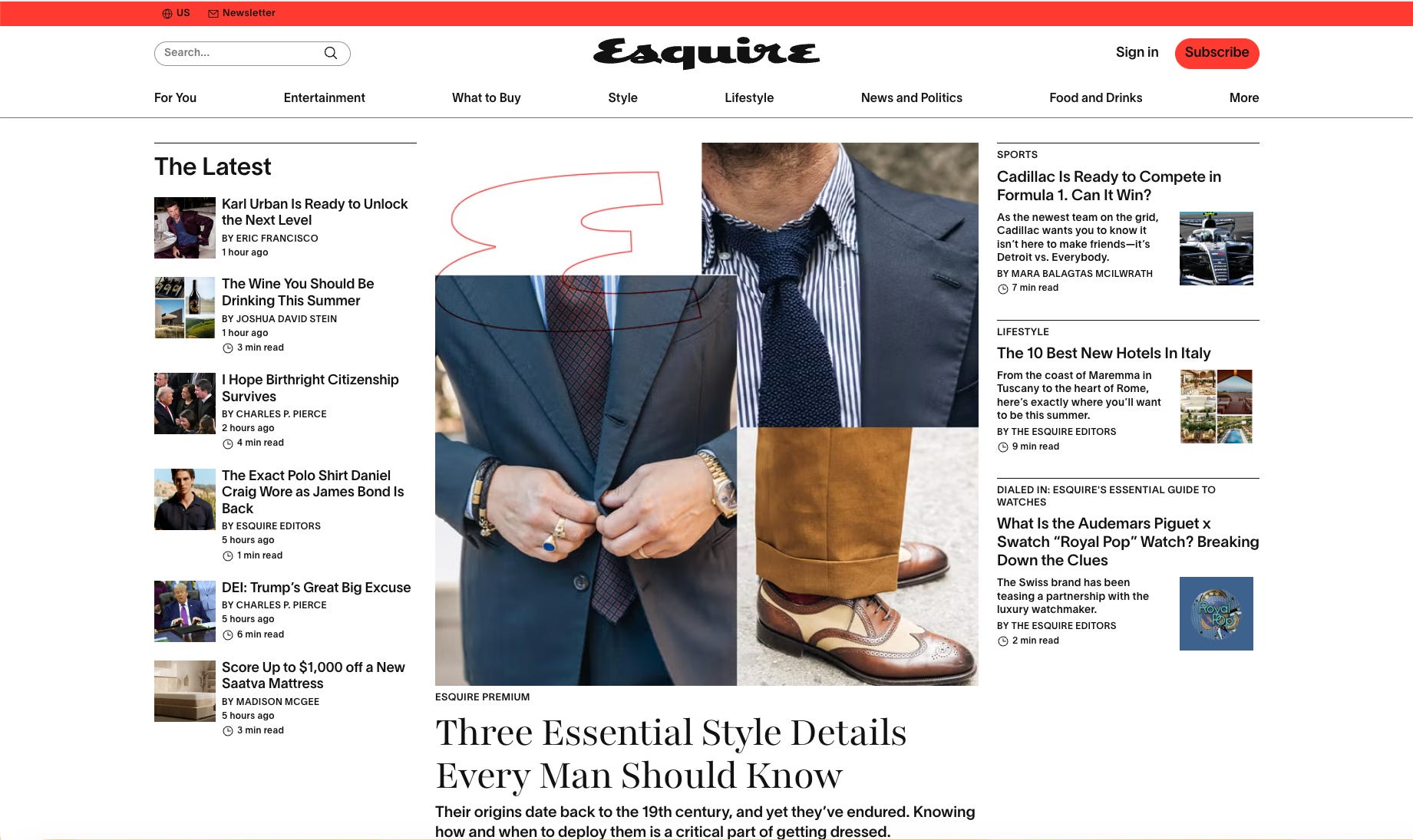
I had started It Wasn’t Pretty Folks, But Didn’t We Have Fun? Esquire in the Sixties by Carol Polsgrove, a few days before going to the theatre. I knew the magazine had produced some daring work, and eye-catching covers at the time. But it was a little hard to imagine. Like Runway, Esquire has been reduced to a shell of its former glory. Just this week, its homepage included articles like “Three Essential Style Details Every Man Should Know”, “Cadillac Is Ready to Compete in Formula 1. Can It Win?” and “The 10 Best New Hotels in Italy”. And yet it was once a bastion of New Journalism. A publication where writers like James Baldwin, Tom Wolfe, Norman Mailer, Raymond Carver, and Nora Ephron could have their fiction published, and also be given reporting assignments.
Polsgrove’s book centres on the rise and reign of Esquire’s legendary editor, Harold Hayes, who approached the magazine as a sort of free-for-all. A thing that was capable of contradicting itself, of presenting opposing viewpoints, of always surprising its audience, while striving to remain neutral. Like now, the ‘60s were a time of great uncertainty and upheaval in the United States, and it’s interesting to see how his philosophies as an editor translate to our times. He wasn’t perfect by any means–he was a philanderer, and slow to respond to social issues of the day, like rock and roll, the Vietnam War, or women’s liberation, which Polsgrove says he was especially ambivalent towards.
But he also knew some things about running a media operation; about creating content. These include, but are not limited to, the following.
He wanted to touch a nerve. In a memo to staff, Hayes urged Esquire’s editors to be “daring, original, bold, controversial, authoritative and responsible…” He continued, “We can literally do a story about anything in the world… [but] will it shake people up?”
He existed on the edge of the current. Esquire operated on long lead times, with writers being assigned six months or more before they appeared in print. Even in the ‘60s, this was slow. To keep things fresh, Hayes encouraged writers to “get to the sidelines and watch.” He wanted to explore events in a story that could ripple into the future.
He knew writers need editors. Specifically, Hayes viewed Esquire as an environment in which symbiotic relationships between writers and editors could form. He believed that editors could evaluate a writer’s work, but also push it into new territory. That the magazine editor “holds the writer’s hand as he works on voice, structure, syntax and the more complex techniques of prose… need[ed] to advance in their profession.”
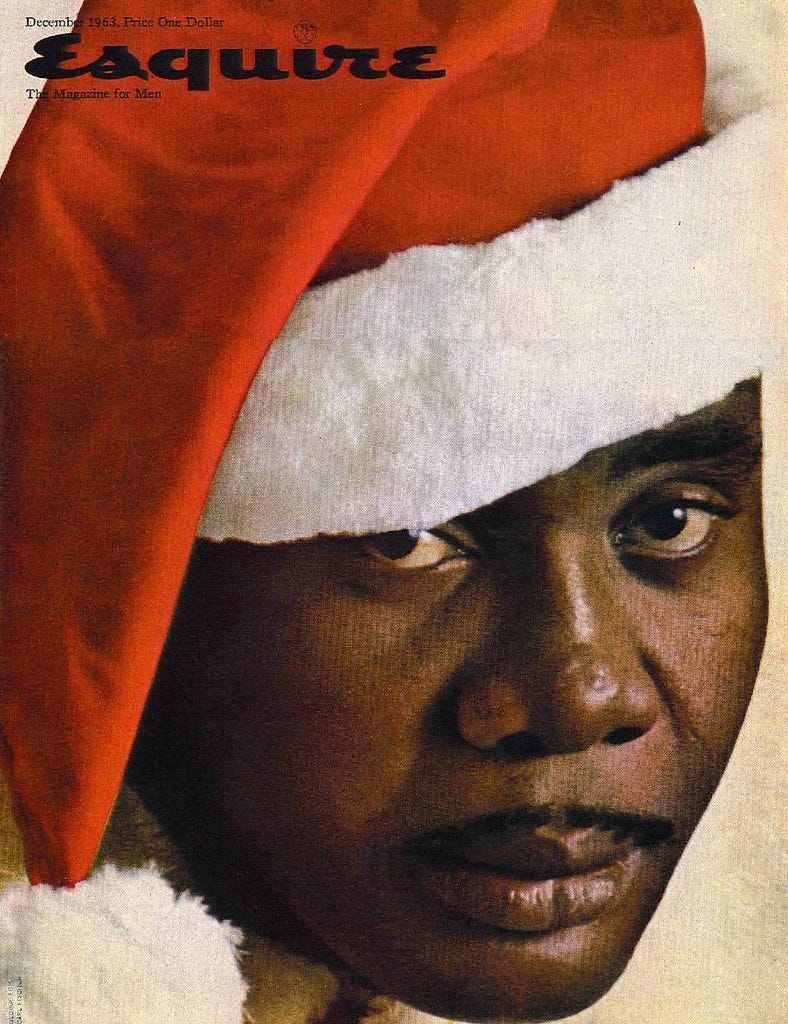
Perhaps more than anything, though, Hayes fought to inform the audience about “What It All Means”. He encouraged writers, and thus the audience, to see subjects as part of the bigger whole. He did this even when it affected his relationship with advertisers. He supported a cover featuring heavyweight champion Sonny Liston as Santa Claus, which cost the magazine at least $750,000.
One could maybe argue that Esquire needs that money more than ever. But if it didn’t lose the money in the first place, would anyone even still be thinking about it? Does the name Ramparts mean anything to you?
No?
Exactly.
The movies will tell you that the only way to “win” in modern media is to find the most ethical billionaire you can and hitch your wagon to them. And maybe that’s true. But if you aren’t spending those billions in a meaningful way, the balance sheet is the least of your worries.
Oh Messy Life
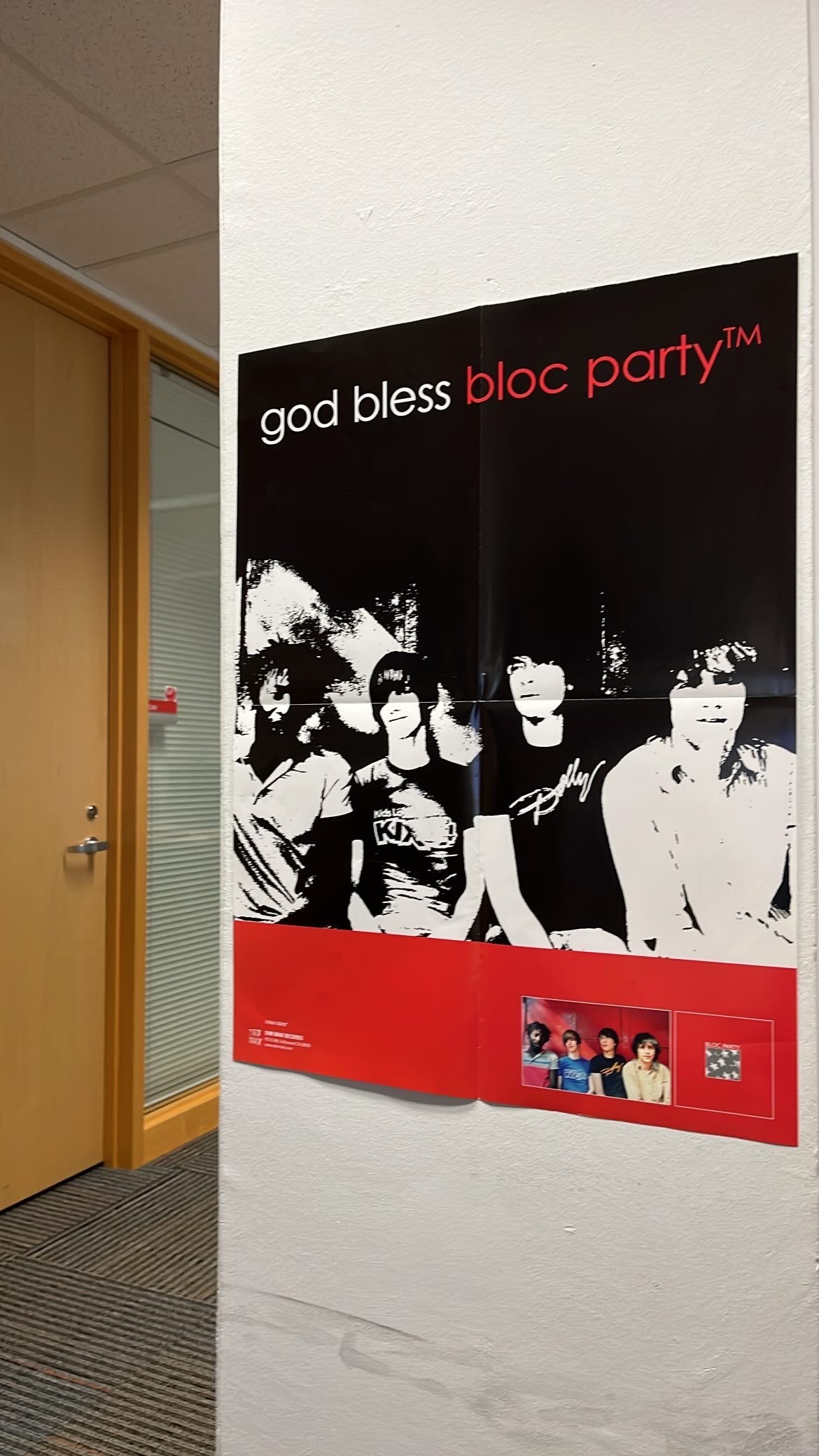
ICYMI: I didn’t publish any newsletters last week. So here’s a photo of my new Bloc Party poster instead—I got it off eBay for $20.
Meaghan Garvey’s first book, Midwest Death Trip, is now available wherever fine literature is sold. She pitched the book as Eat, Pray, Love but set in Indiana, and as fate would have it, guess who she’s chilling next to on the charts.
Ali Royals has resurrected the Outfit Prompt Hotline. To participate, text PROMPT to +1 (844) 329-6617
Dan Ozzi interviewed author and musician Mike Huguenor, who has a new book out about the iconic punk label Asian Man Records. It’s called Elvis Is Dead, I’m Still Alive: The Story of Asian Man Records and it seems of interest to anyone making art or trying to DIY their own scene.
Chris Maradiaga, who advised me to get offline, has some strong words for the menswear community, and specifically r/ThrowingFits. He’s calling it The Most Annoying Place Online.
Similar sentiment: kate lindsay wrote a great piece about people who take personal essays too seriously. “This is supposed to be fun, and you’re so outraged that you’re attacking real people for their little essays.”
Kareem Rahma’s popular series Keep The Metre Running is back, but this time with full episodes. The first two drop exclusively on YouTube this evening at 7 pm est. Watch here.
Chris DeVille reflected on the rise of Chance the Rapper to commemorate 10 years of his breakthrough album, Colouring Book. One of the weirder side-quests from this time was Lil Chano’s cover of the Arthur theme song. Can you imagine?
Peyton thoughts: My sister-in-law and cherished year-end Chune contributor Peyton is now on Substack. She recently wrote about The Drama, which I haven’t seen, but subsequently can’t stop thinking about.
Oh, and happy birthday to HuPu’s first-ever friend Brynn Wallner !

Proper Chune
Giddy-up and go
It tastes like heaven
My next guest is…
Billboard Magazine senior writer Kristin Robinson, whose work kick started the Chaotic Good/”Geese is a psy-op” discourse.